 Save to Pinterest
 There's something magical about the moment you pull a baking sheet of roasted peppers from the oven—the kitchen fills with this sweet, smoky perfume that makes everyone pause and ask what you're making. I discovered this soup on a gray afternoon when I had a surplus of red peppers from the farmers market and wanted something that felt both comforting and a little bit special. The harissa caught me off guard at first, that sudden heat against the silky sweetness, but it's exactly what makes this soup impossible to stop thinking about.
I made this for my partner one October evening when the weather shifted and suddenly soup season felt urgent and necessary. He stood at the stove while I blended the peppers, watching the color transform from chunky red to this almost iridescent coral, and said something like, "That's the color of a sunset you'd actually want to eat." It became our fall staple after that, the kind of recipe that gets made regularly without needing to check the instructions again.
Ingredients
- Red bell peppers: Buy the biggest, smoothest ones you can find—they roast more evenly and yield more flesh once peeled, which matters more than you'd think.
- Garlic head: Roasting mellows garlic into something almost sweet and spreadable, nothing like raw garlic's sharp bite.
- Yellow onion: The sweetness of yellow onion balances harissa's heat better than white onions would.
- Carrot and potato: These aren't just filler; they add natural sweetness and body that makes the soup feel substantial without cream.
- Tomato paste: A tablespoon concentrates umami and adds depth that fresh tomatoes can't quite match in this context.
- Harissa paste: This North African spice blend is your secret weapon—it brings complexity, heat, and a slight smokiness that transforms simple roasted peppers into something memorable.
- Smoked paprika: Use the real stuff from Spain if you can find it; it adds a whisper of campfire flavor without overpowering.
- Vegetable broth: The quality matters here since it's your main liquid—homemade is ideal, but a good store-bought broth won't let you down.
Tired of Takeout? 🥡
Get 10 meals you can make faster than delivery arrives. Seriously.
One email. No spam. Unsubscribe anytime.
Instructions
- Get your peppers and garlic ready for roasting:
- Halve your peppers lengthwise, scoop out all the seeds and white membranes—they're bitter and you don't want them. Slice the top off your garlic head just enough to expose the cloves, then drizzle everything with olive oil and arrange on a parchment-lined sheet.
- Roast until everything caramelizes:
- Let the peppers go 25 to 30 minutes until their skins blister and char in spots—this is where the sweetness and depth come from. The garlic should feel soft when you squeeze it through the skin.
- Peel the peppers while they're still warm:
- Once cooled enough to handle, the charred skin slides off surprisingly easily. Squeeze the roasted garlic cloves right out of their papery skins into a small bowl.
- Build flavor with the aromatics:
- Heat olive oil in your pot, add the diced onion, carrot, and potato, and let them soften for 5 to 7 minutes—you're not looking for color here, just tenderness. Stir in tomato paste and harissa, let them sit in the heat for about a minute so the flavors wake up.
- Simmer everything together:
- Add your roasted peppers, squeezed garlic cloves, smoked paprika, and vegetable broth, then bring it to a boil before lowering the heat to a gentle simmer. Let it bubble quietly for 15 to 20 minutes until the carrot and potato are completely tender.
- Blend until it's silky:
- Use an immersion blender right in the pot if you have one—it's less fussy than transferring batches to a blender. Keep going until there are no visible flecks and the soup has a uniform, glossy texture.
- Season and serve with care:
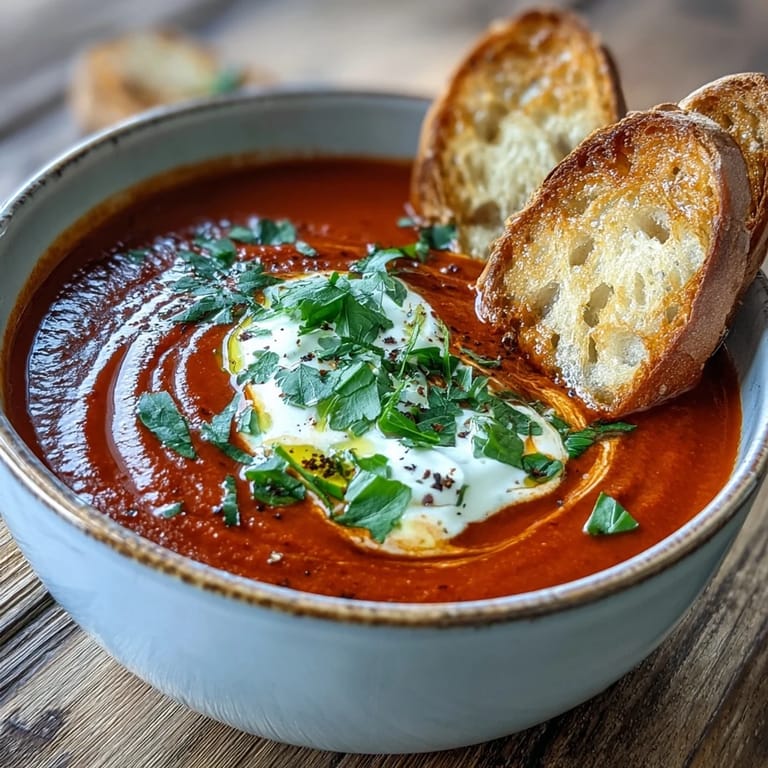
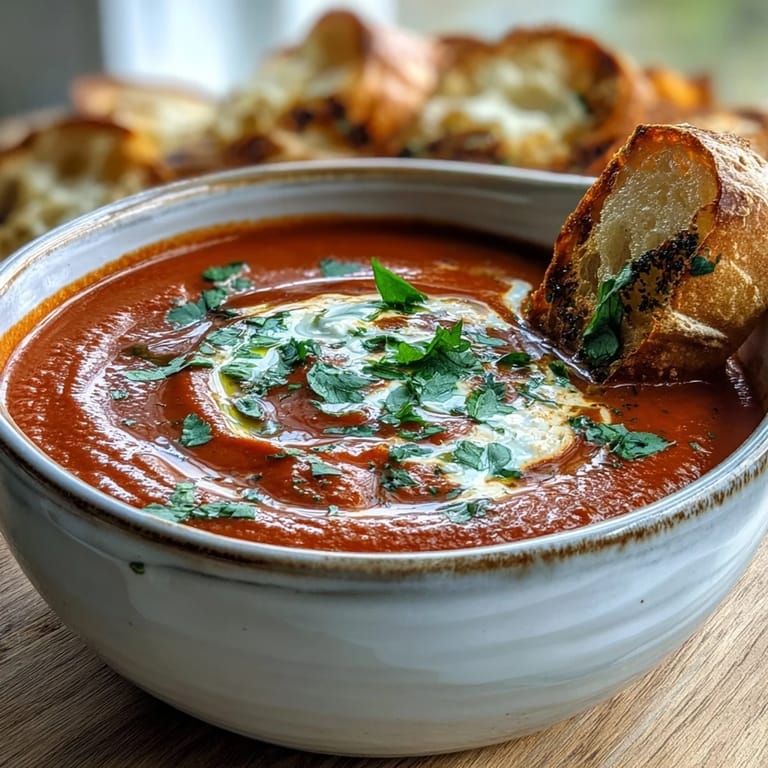
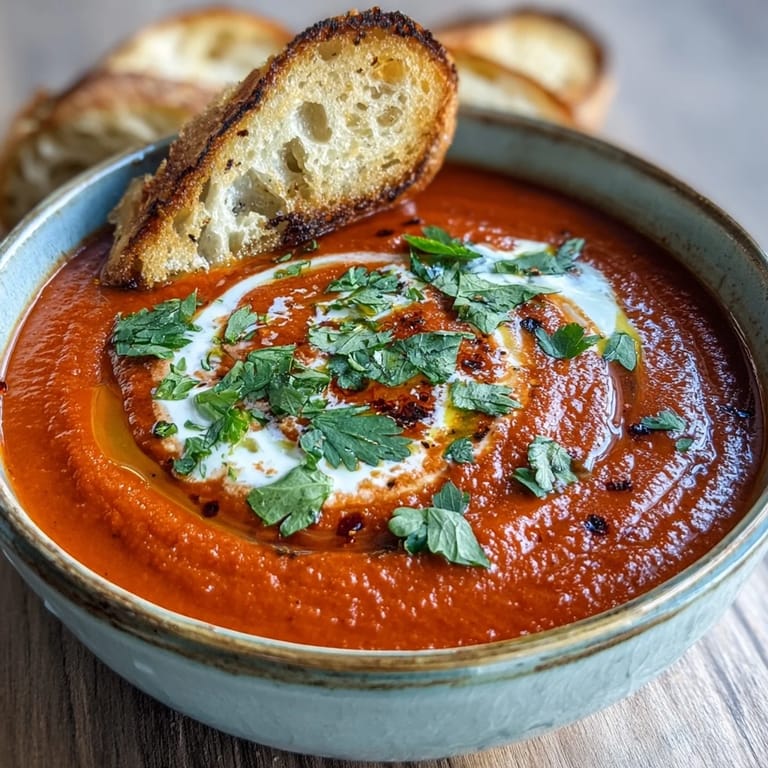
- Taste as you add salt and pepper; harissa already brings salt, so go easy at first. Ladle into bowls, swirl with a spoonful of crème fraîche or yogurt, scatter herbs over top, and serve alongside crusty bread for soaking up every last drop.
 Save to Pinterest
 This soup has a way of turning an ordinary Tuesday into something that feels intentional and thoughtful. There's something about serving something warm and silky that makes people feel genuinely cared for, even if they're just your household on a random weeknight.
Why Roasting Changes Everything
Raw peppers and raw garlic would taste thin and sharp compared to what happens when you roast them. Roasting concentrates sugars and mellows sulfur compounds, which is why roasted garlic tastes almost sweet and buttery instead of assertive. The charred pepper skin isn't just for show—it adds a subtle bitterness that keeps the soup from tasting like liquid candy, and the roasted flesh becomes impossibly tender and almost caramelized.
The Harissa Question
Harissa is a paste made from chiles, spices, and oil that originates from Tunisia, and it's become one of those pantry staples that can change how you cook. It brings heat, sure, but also complexity—notes of caraway, coriander, and cumin depending on the brand. I started with half a teaspoon in my first batch and gradually worked up to the full amount, and now I can't imagine this soup without it, but your tolerance is your own, and there's no shame in dialing it back.
Make-Ahead Magic and Storage
This soup genuinely improves after sitting overnight, as if the flavors needed time to settle and become friends with each other. It keeps beautifully in the fridge for four or five days, and freezes well for up to three months if you want to build a supply for colder months. If you're doubling or tripling the recipe for a crowd, blend it the day before serving so you only have to reheat and taste for seasoning adjustments on the day itself.
- Reheat gently over medium heat rather than blasting it on high, which can make the texture separate.
- If it thickens too much after sitting, thin it with vegetable broth or even a splash of water until you like the consistency.
- Freeze in portions so you can thaw exactly what you need rather than a giant block.
 Save to Pinterest
 Once you make this once, you'll find yourself returning to it when you want something that feels both easy and impressive. It's the kind of recipe that proves good cooking is mostly about choosing quality ingredients and giving them space to become their best selves.
Ask About This Recipe
- → Can I make this soup ahead of time?
Yes, this soup actually improves after resting. Make it up to 3 days ahead and store in the refrigerator. The flavors meld together beautifully, and reheating only takes minutes on the stovetop.
- → How spicy is the harissa in this soup?
The harissa adds a gentle warmth rather than overwhelming heat. Start with 1½ teaspoons as written, then adjust to your preference. You can always add more or less depending on your spice tolerance.
- → What can I use instead of crème fraîche?
Greek yogurt, sour cream, or coconut milk work well as alternatives. For a completely dairy-free version, swirl in coconut cream or simply omit the creamy garnish entirely.
- → Do I have to roast the peppers first?
Roasting is essential for achieving that deep, sweet flavor and silky texture. The charred skins add complexity you can't get from raw or sautéed peppers alone. It's worth the extra 25 minutes.
- → Can I freeze this soup?
Absolutely. Let the soup cool completely, then freeze in airtight containers for up to 3 months. Thaw overnight in the refrigerator and reheat gently on the stovetop, adding a splash of broth if needed.
- → What's the purpose of the potato in this recipe?
The potato acts as a natural thickener, adding body and creaminess without dairy. It also helps balance the sweetness of the peppers and creates a smoother, more velvety texture when pureed.